Selecting the right water storage tank is an important decision for commercial, industrial, municipal, and fire protection applications. The material used in a tank affects durability, maintenance requirements, water quality, installation flexibility, and long-term operating costs.
Two of the most widely used options are stainless steel tanks and hot-dip galvanised (HDG) panel tanks. Both technologies have proven performance records and are used across a broad range of industries.
However, each solution offers distinct advantages depending on the application, environment, and project requirements.
This guide compares stainless steel tanks and HDG panel tanks to help asset owners make informed decisions when selecting a water storage solution.
What are Stainless Steel Tanks?
Stainless steel tanks are water storage systems manufactured from corrosion-resistant stainless steel. They are commonly used for potable water, industrial water storage, and fire protection systems.
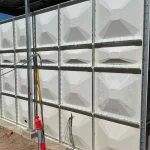
Many modern systems are designed as stainless steel sectional tanks, allowing individual panels to be assembled on-site. This modular design offers flexibility in tank sizing and installation.
Stainless steel is known for:
- High corrosion resistance
- Excellent hygiene properties
- Long service life
- Minimal maintenance requirements
- Strong structural performance
Because of these characteristics, stainless steel remains a popular choice for critical water storage applications.
What are HDG Panel Tanks?
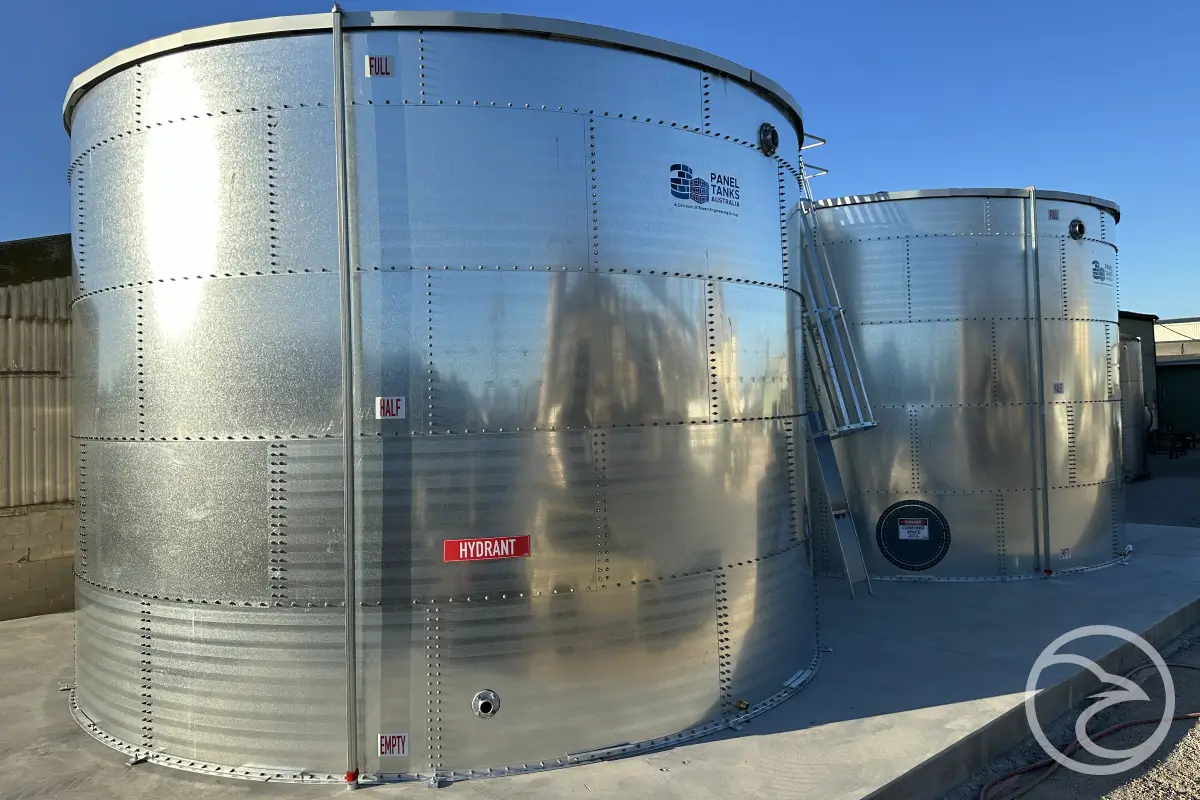
HDG stands for Hot-Dip Galvanised. HDG panel tanks are manufactured from steel panels that have been coated with zinc through a hot-dip galvanising process. The zinc coating provides protection against corrosion and environmental exposure.
Modern HDG panel tanks are widely used for:
- Fire water storage
- Irrigation systems
- Irrigation systems
- Commercial developments
- Municipal infrastructure
Their strength and cost-effectiveness make them a common solution for large-capacity water storage projects.
Stainless Steel Tanks vs HDG Panel Tanks: Key Differences
Although both tank types serve similar purposes, there are important differences between the two materials.
Corrosion Resistance
Corrosion resistance is one of the most significant factors when selecting a water storage tank.
Stainless Steel Tanks
Stainless steel naturally forms a protective chromium oxide layer that helps prevent corrosion.
Benefits include:
- Excellent rust resistance
- Strong performance in humid environments
- Protection against water-related deterioration
- Long-term structural stability
The protective layer continually regenerates when exposed to oxygen, helping maintain durability throughout the tank’s lifespan.
HDG Panel Tanks
HDG tanks rely on their zinc coating for corrosion protection. The galvanised coating helps protect the steel beneath from environmental exposure.
However, over time the zinc layer may gradually wear away due to:
- Weather exposure
- Water chemistry
- Physical wear
- Environmental contaminants
For highly corrosive environments, stainless steel generally provides superior long-term resistance.
Durability and Lifespan
Both tank types are designed for long service life, but performance can vary depending on operating conditions.
Stainless Steel
Stainless steel offers:
- Exceptional structural durability
- High impact resistance
- Long service life
- Minimal material degradation
With proper maintenance, stainless steel tanks can remain operational for several decades.
HDG Tanks
HDG tanks also provide strong structural performance.
Advantages include:
- Robust steel construction
- High load-bearing capacity
- Proven field performance
However, lifespan is often influenced by the condition of the galvanised coating. Once the protective zinc layer deteriorates, additional maintenance may be required.
Water Quality and Hygiene
Water quality is especially important for potable water applications.
Stainless Steel Performance
Stainless steel is widely regarded as one of the most hygienic water storage materials.
Benefits include:
- Smooth internal surfaces
- Easy cleaning
- Reduced bacterial growth
- Minimal contamination risk
These characteristics make stainless steel a preferred choice for drinking water storage.
HDG Tank Performance
HDG tanks can be used for potable water storage when designed appropriately. However, the internal environment may require additional consideration to maintain water quality over time.
For projects where hygiene is a primary concern, stainless steel tanks often provide advantages.
Maintenance Requirements
Maintenance requirements directly affect lifecycle costs.
Stainless Steel Tanks
Routine maintenance generally focuses on:
- Visual inspections
- Cleaning
- Connection checks
- Condition monitoring
Because stainless steel resists corrosion naturally, maintenance demands are often relatively low.
HDG Tanks
HDG tanks also require regular inspections.
Maintenance programs may focus on:
- Coating condition
- Surface deterioration
- Corrosion monitoring
- Joint inspections
As galvanised coatings age, maintenance requirements may increase.
Structural Strength
Both materials provide excellent structural performance.
Stainless Steel
Stainless steel offers:
- High tensile strength
- Excellent impact resistance
- Long-term dimensional stability
These characteristics support demanding operating environments.
HDG Steel
Because HDG tanks use structural steel panels, they also provide:
- Strong load-bearing capacity
- Robust structural performance
- Reliable long-term operation
From a structural perspective, both options perform well when properly designed and maintained.
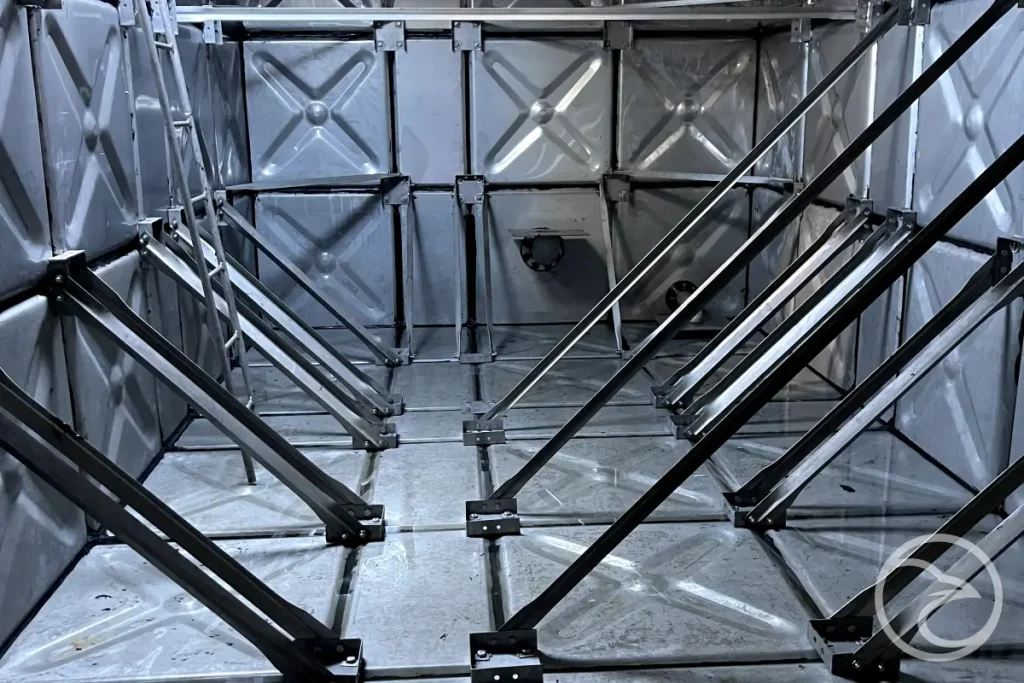
Installation Flexibility
Modern water storage projects often involve challenging site conditions.
Installation flexibility can therefore be an important consideration.
Stainless Steel Sectional Systems
Modular stainless steel tanks are assembled from individual panels.
This approach offers:
- Flexible sizing
- Easier transportation
- Adaptability to restricted access locations
- Future expansion opportunities
HDG Panel Systems
Similarly, HDG tanks are supplied in modular sections for on-site assembly.
Benefits include:
- Efficient transport
- Flexible configurations
- Suitability for large-capacity installations
Both systems offer excellent installation flexibility compared with traditional welded tanks.
Lifecycle Costs
Initial purchase costs are only part of the overall investment. Lifecycle costs should also be considered.
Stainless Steel
While stainless steel tanks may require a higher upfront investment, benefits often include:
- Lower maintenance costs
- Reduced corrosion-related repairs
- Longer service life
- Strong long-term value
HDG Tanks
HDG tanks often offer a lower initial capital cost. This can make them attractive for projects with strict budget requirements.
However, long-term maintenance and coating management should be considered when evaluating total ownership costs.
How Do GRP Tanks Compare?
GRP tanks are another popular option within the water storage industry. Unlike steel-based systems, GRP tanks are manufactured using glass reinforced plastic materials.
If you are evaluating all major tank materials, it may be helpful to review our comparison of stainless steel tanks vs GRP panel tanks.
You can also explore the differences between galvanised and GRP systems in our guide to HDG tanks vs GRP tanks. These comparisons provide additional insight into how alternative tank technologies perform across different applications.
When to Choose Stainless Steel Tanks
Stainless steel tanks are often the preferred option when:
- Water quality is critical
- Corrosion resistance is a priority
- Long asset life is required
- Maintenance should be minimised
- Harsh environmental conditions are expected
These characteristics make stainless steel particularly suitable for potable water applications.
When to Choose HDG Panel Tanks
HDG panel tanks may be the better option when:
- Initial project costs are important
- Large storage volumes are required
- Proven steel construction is preferred
- Proven steel construction is preferred
Many organisations choose HDG tanks because they provide strong structural performance at a competitive cost.
Which Tank is Better?
There is no single answer that applies to every project.
The best solution depends on:
- Water quality requirements
- Environmental conditions
- Budget considerations
- Maintenance strategy
- Expected asset lifespan
For projects focused on longevity, hygiene, and corrosion resistance, stainless steel often offers advantages. For projects where cost-effectiveness and structural strength are key priorities, HDG panel tanks may provide an excellent solution.
Conclusion
When comparing stainless steel tanks vs HDG panel tanks, both solutions offer proven performance for water storage applications.
Stainless steel provides excellent corrosion resistance, hygiene, and long-term durability, while HDG panel tanks offer strong structural performance, modular flexibility, and cost-effective installation.
The right choice depends on project requirements, environmental conditions, and long-term maintenance expectations.