Heavy rainfall can place significant pressure on stormwater infrastructure. When large volumes of water enter drainage networks quickly, downstream systems may struggle to manage the increased flow.
A stormwater detention tank helps control this problem. Instead of allowing stormwater to leave a property immediately, the tank temporarily holds water and releases it at a controlled rate.
This approach is commonly known as on-site stormwater detention (OSD). OSD systems are used across residential, commercial, industrial, and infrastructure developments in Australia.
A detention tank is not simply a conventional water storage tank. Its primary purpose is flow management rather than long-term water storage.
This guide explains how detention tanks work, their different types, materials, benefits, and installation options. It also covers maintenance, cleaning, inspections, and factors to consider when selecting an OSD system.
What is a Stormwater Detention Tank?
A stormwater detention tank is designed to temporarily store stormwater during and after rainfall. Water enters the tank from roofs, paved areas, or other connected catchments. Instead of immediately entering the public drainage network, part of this water remains temporarily within the tank.
The stored stormwater is then discharged at a controlled rate. This reduces peak flow from the property during periods of heavy rainfall.
A typical system may include:
- a detention tank or storage area;
- stormwater inlet pipes;
- an outlet;
- a flow-control device;
- an overflow system;
- access points;
- drainage connections;
- inspection and maintenance components.
The exact configuration depends on the development and local drainage requirements.
What is On-Site Stormwater Detention (OSD)?
On-site stormwater detention (OSD) is a method of temporarily holding stormwater within a property before controlled discharge. The key word is detention. Water is detained for a limited period rather than permanently stored.
An on site detention system manages how quickly stormwater leaves a development. This can reduce pressure on downstream drainage infrastructure during rainfall.
OSD requirements can vary between Australian councils and developments. Local authorities may specify allowable discharge rates, storage requirements, and design criteria.
For this reason, an on site detention tank should be designed around site-specific requirements.
How Does a Stormwater Detention System Work?
The basic principle is relatively simple. Rain falls onto the property and is collected from connected catchment areas. Stormwater then flows through drainage pipes toward the detention system. The tank temporarily stores water when inflow exceeds the permitted discharge rate.
A controlled outlet restricts how quickly water can leave. This creates temporary storage during peak rainfall. As rainfall decreases, the stored water continues leaving through the outlet. The tank gradually returns to its normal operating condition.
The process can be summarised as:
Rainfall → collection → temporary detention → controlled discharge → drainage network.
The stormwater detention system therefore helps manage peak flow rather than preventing stormwater discharge completely.
Why are Stormwater Detention Tanks Used
Urban development changes how water moves across land. Natural ground can absorb part of the rainfall that reaches it. Buildings, roads, car parks, and other hard surfaces reduce this infiltration.
More water can therefore become surface runoff. The runoff can also reach drainage systems more quickly. An OSD system helps manage this increased flow at the individual property or development level.
Depending on the project, detention systems can help:
- reduce peak stormwater discharge;
- control runoff leaving a site;
- support downstream drainage capacity;
- manage increased runoff from development;
- meet applicable drainage requirements;
- reduce pressure on public infrastructure.
The required storage volume and discharge rate should be determined during the project’s stormwater design.
Detention Tanks vs Retention Tanks
Detention and retention are sometimes used interchangeably, but they describe different functions. A detention tank temporarily stores stormwater before releasing it. A retention system is generally intended to retain water for reuse, infiltration, or another purpose.
The key difference is what happens after water enters storage. A detention tank normally empties after the storm event through controlled discharge. A retention tank may keep water for longer-term use.
Some developments can combine both functions. For example, a system may reserve one storage volume for rainwater reuse and another for stormwater detention. The design must clearly separate these functions where required.
Where are OSD Tanks Used?
OSD tanks can be used across many types of developments.
Common applications include:
- apartment buildings;
- residential developments;
- commercial buildings;
- warehouses;
- shopping centres;
- industrial facilities;
- schools;
- healthcare facilities;
- car parks;
- mixed-use developments;
- infrastructure projects.
The appropriate system depends heavily on available space. A large industrial property may have different options from a compact urban development.
Site layout often determines whether above-ground or underground stormwater detention tanks are more practical.
Main Types of Stormwater Detention Tanks
There is no single tank configuration suitable for every project. Detention systems can be classified according to location, construction, and design.
The two broad installation categories are underground and above-ground systems.
Underground Stormwater Detention Tanks
An underground detention tank is installed below ground level. This arrangement can be particularly useful where surface space is valuable.
Underground systems may be located beneath:
- landscaped areas;
- driveways;
- car parks;
- courtyards;
- buildings, where appropriately engineered;
- other usable site areas.
One major advantage is space efficiency. The development can use the surface while stormwater storage remains below. However, underground systems introduce additional considerations.
Access must be provided for future inspection and maintenance. Structural loads from soil, vehicles, buildings, or other infrastructure may also need consideration.
Drainage and groundwater conditions can influence the design. Underground does not mean inaccessible. A suitable underground stormwater detention tank should still allow necessary inspection, cleaning, and maintenance.
Advantages of Underground Detention Tanks
Underground systems can offer several benefits.
These include:
- efficient use of limited land;
- minimal visual impact;
- compatibility with dense developments;
- preservation of landscaped or operational space;
- large storage capacity within suitable sites.
They can be particularly valuable where an above-ground tank would interfere with site use. The trade-off is usually greater installation complexity.
Excavation, structural requirements, access, and future maintenance all need to be considered during design.
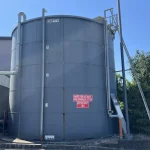
Above-Ground Detention Tanks
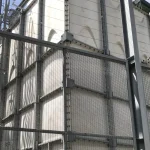
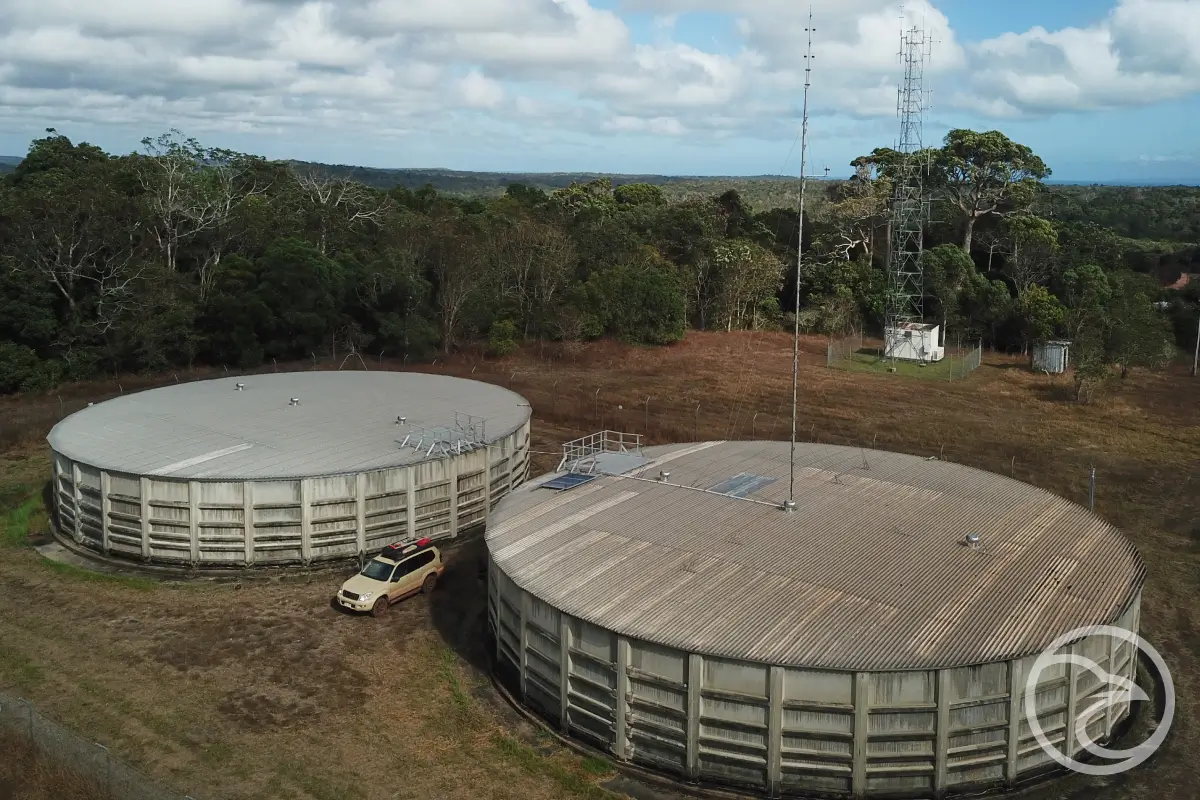
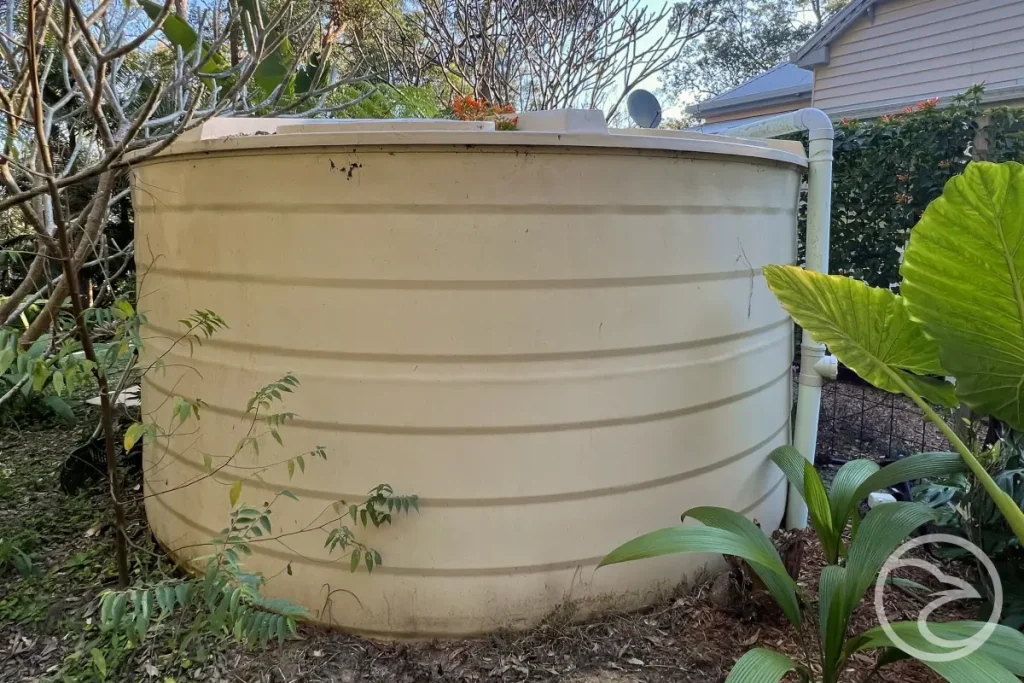
Above-ground detention tanks provide temporary stormwater storage without requiring the entire system to be buried. They can be positioned in suitable areas around a property. These tanks may be practical where sufficient land is available and visual impact can be managed.
Above-ground systems can offer easier access for inspection and maintenance. Installation may also involve less excavation than a comparable underground system. However, they occupy usable surface space.
They may also require consideration of appearance, protection, access, and surrounding site activities.
Advantages of Above-Ground OSD Tanks
Potential benefits include:
- easier visual monitoring;
- simpler maintenance access;
- reduced excavation requirements;
- easier access to some components;
- straightforward leak identification;
- potentially simpler future modifications.
Their suitability depends on the development. For some industrial or rural sites, using surface space may not be a major concern. For dense commercial developments, underground storage may be more practical.
Underground vs Above-Ground OSD Tanks
The best option depends on site conditions rather than one system being universally better. An underground tank can preserve valuable surface area. An above-ground tank can make inspection and maintenance easier.
Important comparison factors include:
| Factor | Underground OSD Tank | Above-Ground OSD Tank |
|---|---|---|
| Surface space | Preserved | Tank occupies space |
| Visual impact | Usually minimal | More visible |
| Excavation | Significant | Usually lower |
| Maintenance access | Can be more complex | Often easier |
| Structural loading | Important consideration | Different structural demands |
| Installation complexity | Often higher | Can be simpler |
| Leak visibility | May be less obvious | Often easier to observe |
The decision should consider the entire lifecycle of the system. Installation convenience is only one factor. Future inspection, cleaning, repairs, and access are equally important.
What Materials are OSD Tanks Made From?
Stormwater detention tanks can be manufactured or constructed using several materials. The appropriate choice depends on tank size, location, loading, site conditions, and design requirements.
Concrete OSD Tanks
Concrete OSD tanks are commonly associated with larger developments and underground installations. Concrete provides significant structural strength and can be designed for demanding site conditions.
An OSD concrete tank may be constructed as part of a building or installed as a dedicated underground structure.
Potential advantages include:
- structural strength;
- suitability for underground installations;
- ability to accommodate large capacities;
- flexibility in engineered configurations;
- long service potential when appropriately designed.
However, concrete tanks still require inspection and maintenance. Cracking, joints, penetrations, internal surfaces, and accumulated sediment can require attention over time.
OSD concrete tanks should therefore be considered long-term infrastructure rather than maintenance-free structures.
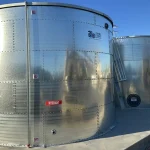
Steel Detention Tanks
Steel can also be used for stormwater storage systems. Different steel tank designs are available depending on the project. Steel systems can provide modularity and structural performance for suitable applications.
Corrosion protection becomes an important consideration. The tank environment, water exposure, coatings, and maintenance should all be considered during material selection.
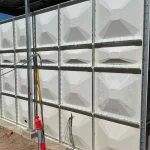
GRP or FRP Tanks
Glass-reinforced plastic can provide another option for certain stormwater storage applications. GRP offers corrosion resistance and modular construction.
Panel systems can be particularly useful where tanks need to be assembled within restricted spaces. However, structural design, joints, supports, and installation requirements remain important.
Polyethylene and Plastic Systems
Plastic tank systems can suit certain smaller or modular detention applications. Their relatively low weight can simplify transport and installation.
The design must still account for water pressure, soil loads, buoyancy, and other site conditions. This is particularly important for underground installations.
Modular Underground Systems
Some underground stormwater detention tanks use modular storage components rather than conventional tank structures. These systems can create storage volumes beneath landscaped or trafficable areas.
Their suitability depends on loading, ground conditions, access, and required storage volume. Maintenance access should be considered before installation.
Key Benefits of On-Site Stormwater Detention
The primary benefit of on site stormwater detention is control over stormwater discharge.
Instead of sending peak runoff directly downstream, the system temporarily stores part of the flow. This provides several potential benefits.
Reduced Peak Discharge
The tank slows the rate at which stormwater leaves the property. This can reduce pressure on downstream drainage during heavy rainfall.
Better Management of Developed Sites
Development often increases impermeable surfaces. OSD helps manage the additional runoff created by those surfaces.
Flexible Installation Options
Detention storage can be located above or below ground. Different materials and configurations allow systems to suit a wide range of developments.
Efficient Use of Space
Underground storage can preserve valuable surface areas. This can be particularly important in urban developments.
Integration With Broader Stormwater Systems
An on site detention system can operate alongside pits, pipes, drainage channels, rainwater tanks, and other stormwater infrastructure. The entire system should work together.
How is OSD Tank Capacity Determined?
Selecting capacity is not simply a matter of choosing the largest tank that fits. OSD storage requirements are typically determined through hydraulic and stormwater design.
Important factors can include:
- site area;
- roof area;
- impermeable surfaces;
- rainfall data;
- development type;
- existing site conditions;
- allowable discharge rate;
- local authority requirements;
- outlet configuration;
- available storage location.
The relationship between storage volume and discharge rate is particularly important. A large tank with an unsuitable outlet may not perform as intended.
Likewise, a correctly designed outlet cannot compensate for insufficient storage volume. The complete system should be considered.
How to Choose the Right OSD Tank
Choosing an OSD tank starts with understanding the site’s stormwater requirements. Several questions should be considered.
What Storage Volume is Required?
Required detention volume should come from appropriate stormwater design. Avoid selecting tank capacity before understanding the hydraulic requirements.
Where can the Tank be Installed?
Available space influences whether the system should be underground or above ground. The location must also allow appropriate connections to the drainage network.
What Loads Will Affect the Tank?
Underground tanks can experience significant external loads. These may come from soil, vehicles, structures, groundwater, or surrounding infrastructure.
Structural requirements should be considered during design.
Which Material Suits the Application?
Concrete, steel, GRP, and plastic systems have different characteristics. Material choice should consider site conditions, capacity, access, durability, and maintenance.
How Will the Tank be Accessed?
Access is sometimes overlooked during initial design. However, the tank will eventually require inspection and maintenance.
Suitable access points should be incorporated from the beginning.
How Will Sediment be Managed?
Stormwater carries sediment and debris. The system should allow accumulated material to be identified and removed.
What are the Local Requirements?
OSD requirements vary between locations. Australian councils and authorities can have different stormwater specifications.
Design should therefore reflect requirements applicable to the actual site.
Stormwater Detention Tank Maintenance
A detention tank is not a set-and-forget asset. Stormwater can carry leaves, dirt, litter, sediment, and other material into the system. Over time, this material can accumulate.
Maintenance may include checking:
- inlets;
- outlets;
- flow-control devices;
- access points;
- overflow paths;
- tank surfaces;
- structural components;
- sediment levels;
- debris accumulation;
- drainage connections.
The outlet deserves particular attention. A partially blocked outlet can change how the detention system performs. Maintenance frequency should reflect site conditions and inspection findings.
Sites receiving high sediment or debris loads may require more frequent attention.
OSD Tank Inspections
Inspection helps determine whether the stormwater detention system remains in suitable condition. An inspection may consider both hydraulic and physical components.
Potential inspection areas include:
- visible structural deterioration;
- cracking;
- corrosion;
- leaks;
- sediment;
- blocked components;
- inlet condition;
- outlet condition;
- access systems;
- previous repairs.
Inspection records can help identify changes over time. This is particularly useful for underground systems where developing problems may not be externally visible.
Regular condition information allows maintenance to be planned before defects become more significant. Visit our stormwater detention tank inspection page to learn how professional inspections can identify developing structural and operational issues.
Stormwater Detention Tank Cleaning
Cleaning is another important part of OSD maintenance. Stormwater naturally carries sediment and debris. Some material settles once water enters the detention tank. Accumulation can eventually reduce usable storage volume or affect drainage components.
Cleaning may involve removing:
- sediment;
- sludge;
- leaves;
- litter;
- organic material;
- other debris.
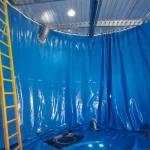
The required cleaning method depends on tank configuration and access. Large underground tanks may require specialised equipment and safety procedures.
Cleaning should also provide an opportunity to observe surfaces that were previously hidden beneath sediment. Visit our water tank cleaning page to learn more about professional sediment and debris removal for different tank systems.
Common OSD Tank Problems
Even a well-designed system can develop problems during its service life.
Common issues can include:
- sediment accumulation;
- blocked outlets;
- damaged flow controls;
- debris around inlets;
- structural cracking;
- corrosion;
- leaks;
- damaged access components;
- failed seals;
- standing water;
- unexpected tank movement.
The cause should be identified before corrective work begins. For example, repeatedly clearing an outlet may not solve a recurring upstream debris problem.
Likewise, repairing a crack without understanding structural movement may provide only a temporary solution.
What Happens if a Detention Tank is not Maintained?
Poor maintenance can affect both storage capacity and discharge performance. Sediment can gradually reduce the effective volume available for stormwater. Debris can obstruct outlets or other components.
Structural defects can also worsen if they remain unnoticed.
Potential consequences include:
- reduced detention capacity;
- blocked discharge;
- poor system performance;
- localised flooding;
- overflow problems;
- larger maintenance requirements;
- increased repair costs;
- deterioration of tank components.
An OSD system may appear inactive for much of the year. Its performance becomes particularly important during significant rainfall.
Maintenance should therefore happen before the system is urgently needed. For a closer look at inspection requirements and common problem areas, read our OSD tank inspection guide.
How Long do Stormwater Detention Tanks Last?
There is no universal lifespan for every detention tank. Service life depends on construction material, installation, environment, structural loads, maintenance, and operating conditions. Concrete, steel, GRP, and plastic systems can all have different service characteristics.
Factors affecting longevity include:
- material quality;
- structural design;
- installation quality;
- soil conditions;
- groundwater;
- corrosion exposure;
- traffic loads;
- sediment accumulation;
- cleaning methods;
- inspection frequency;
- maintenance history.
The condition of individual components also matters. An outlet or fitting may require attention long before the main tank structure reaches the end of its useful life.
OSD Tanks in Australia
Detention tanks in Australia are used across many developments to manage stormwater runoff. However, there is no single design that applies identically to every site. Requirements can vary between states, councils, catchments, and individual developments.
Local requirements may influence:
- detention volume;
- allowable discharge;
- outlet design;
- overflow arrangements;
- connection points;
- access;
- documentation;
- maintenance obligations.
This makes site-specific design particularly important. An OSD tank should not simply be selected from capacity alone.
It must form part of a stormwater system designed for the actual development.
Final Thoughts
A stormwater detention tank is designed to temporarily hold runoff and control how quickly it leaves a property. This process is known as on-site stormwater detention (OSD).
The basic principle is straightforward. Stormwater enters the system during rainfall, temporary storage manages peak flow, and water leaves through a controlled outlet. However, designing an effective system requires more than selecting a tank.
Storage volume, discharge rate, site layout, structural loads, materials, access, and local requirements all influence the final solution. Both above-ground and underground detention tanks can provide effective storage. Underground systems preserve surface space, while above-ground tanks can provide easier maintenance access.
Material selection is equally important. Concrete OSD tanks, steel tanks, GRP systems, and plastic solutions each have different characteristics.
The system also requires ongoing management. Inspection helps identify structural or operational problems. Cleaning removes accumulated sediment and debris. Maintenance keeps outlets and other components functioning as intended.
For facility owners and developers, the goal is not simply installing an on site detention tank. It is creating a complete stormwater management system that continues performing throughout its service life.