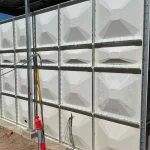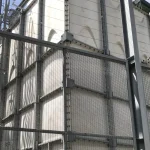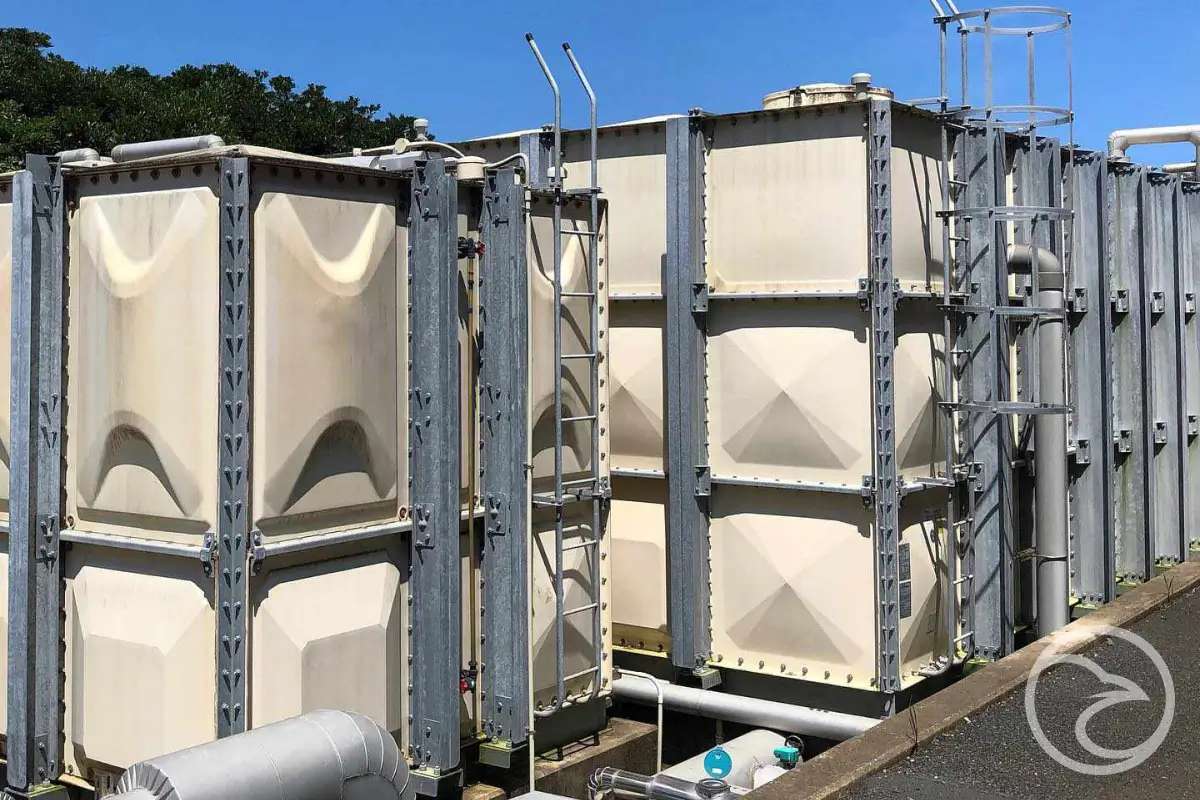
GRP panel tanks provide a flexible solution for storing water across many commercial and industrial applications. These tanks use individual panels to create a complete water storage structure. Their modular design allows tanks to be built in different sizes and configurations.
GRP also offers strong resistance to corrosion and many common environmental conditions. These features make GRP panel tanks suitable for many water storage requirements.
This guide explains how GRP panel tanks work, their construction, benefits, applications, and maintenance considerations.
What is a GRP Panel Tank?
A GRP panel tank is a modular water storage tank made from Glass Reinforced Plastic panels. GRP is also commonly known as fibreglass reinforced plastic.
Individual panels are connected to create the walls, floor, and roof of the tank. The modular system allows manufacturers to create tanks in different dimensions.
This differs from many one-piece tanks, which have fixed shapes and capacities. A GRP panel water tank can be configured according to available space and required storage capacity.
The complete system can also include:
- Internal supports
- External supports
- Sealing materials
- Bolts and fasteners
- Access hatches
- Pipe connections
- Overflow connections
- Drainage points
- Ladders
The exact components depend on the tank design and intended application.
What Does GRP Mean?
GRP stands for Glass Reinforced Plastic. The material combines a polymer resin with glass fibre reinforcement. The glass fibres provide strength within the composite material. The resin binds the material together and helps create the finished panel surface.
This combination produces a strong material with relatively low weight. GRP also behaves differently from metals when exposed to moisture. It does not experience rust in the same way as carbon steel.
This property is particularly useful for water storage applications. However, corrosion resistance does not mean GRP cannot experience other forms of deterioration.
Material quality, installation, environment, and maintenance still influence long-term performance.
What are GRP Tank Panels?
GRP panels are individual structural sections used to construct modular tanks. Each panel forms part of the complete water storage structure. Multiple panels can be connected vertically and horizontally.
This creates the required tank dimensions. Panels are designed to withstand loads created by stored water and the tank structure. Their exact design can vary between tank systems.
Panel systems may include different components for:
- Tank walls
- Tank floors
- Tank roofs
- Corners
- Connections
- Access points
Sealing systems are installed between relevant panel joints. These seals help maintain water containment after the panels are assembled.
The result is a complete GRP panel tank built from repeatable modular sections.
How are GRP Panel Tanks Constructed?
GRP panel tanks are assembled from multiple components. The process starts with a suitable supporting base. Individual panels are then positioned according to the tank design.
Panels are connected using the specified fastening system. Sealing materials are installed at panel joints where required.
Internal structural components may also support the completed tank.
A typical system can include:
- Base structure
- Floor panels
- Wall panels
- Roof panels
- Internal supports
- External supports
- Fasteners
- Joint seals
- Pipe connections
- Access components
Each component performs a particular function. The panels create the main water storage enclosure. Fasteners hold connected sections together.
Seals support water containment at panel joints. Structural supports help the tank manage loads created by stored water. Correct assembly is important for the performance of the complete system.
What is a GRP Sectional Panel Tank?
A GRP sectional panel tank is built from separate GRP sections rather than one complete moulded shell. The term describes the same general modular construction principle. Individual panels are assembled together to form the required tank.
Sectional construction provides significant flexibility. The tank dimensions can be adapted to available installation space. This can be useful when a large one-piece tank cannot reach the installation area.
Individual panels are easier to transport through many restricted spaces. They can then be assembled at the final tank location.
This approach is particularly useful for commercial buildings and industrial facilities.
Are GRP Panel Tanks the Same as Modular Tanks?
GRP panel tanks are a type of modular water tank. The terms describe related characteristics. A GRP modular tank uses repeatable sections to create the complete storage system.
However, not every modular tank is manufactured from GRP. Modular tanks can also use other materials. Therefore, “modular” describes the construction method. “GRP” describes the material used for the panels.
A GRP sectional tank combines both characteristics. It uses Glass Reinforced Plastic within a modular panel system.
This distinction helps explain terms such as:
- GRP modular tank
- GRP sectional tank
- GRP panel tank
- Modular panel tank
- GRP panel water tank
These terms can describe similar systems, depending on the manufacturer and application.
Why is Modular Tank Design Useful?
Modular construction provides several practical advantages. One major advantage is flexibility. Tank dimensions can be configured using individual panels.
This helps when available space does not suit standard one-piece tanks.
Easier Transportation
Large complete tanks can be difficult to transport. Individual panels are much smaller. They can be transported separately and assembled on site.
This can simplify delivery to some commercial properties.
Restricted Access
Some tank locations have narrow doors or limited access routes. Moving a complete large tank through these areas may be impossible.
Individual panels can offer greater installation flexibility.
Flexible Dimensions
Water storage requirements vary between properties. Available installation space also varies. Modular panel tanks can be configured to suit different dimensions.
This allows designers to use available space more efficiently.
Different Storage Requirements
Small and large facilities can have very different water demands. A modular system can support different storage capacities through its configuration.
The required tank should still be designed for its intended application.
What are the Main Benefits of GRP Panel Water Tanks?
GRP panel tanks combine material properties with modular construction. This creates several advantages for water storage applications.
Corrosion Resistance
GRP does not rust like carbon steel. This provides an important advantage in environments involving continuous water exposure. Corrosion resistance can reduce some problems associated with exposed metallic tank surfaces.
However, the complete tank still contains other components. Fasteners, supports, connections, and fittings may use different materials.
Their condition should also be considered during maintenance.
Low Material Weight
GRP panels are relatively lightweight compared with many metallic alternatives. Lower component weight can simplify transport and handling. This can be useful on sites with difficult access.
The final tank still requires appropriate structural support. Water itself creates significant loads regardless of tank material.
Modular Construction
Modular design allows the tank to be assembled from separate panels. This provides greater flexibility during transport and installation.
It can also support different tank dimensions.
Flexible Configuration
Not every building has a large open area for water storage. Columns, walls, equipment, and access routes can restrict available space.
Panel systems can provide more configuration options than fixed one-piece tanks.
Corrosion-Resistant Internal Surfaces
Water remains in continuous contact with internal tank surfaces. GRP does not rely on the same rust protection methods as carbon steel.
This can make the material suitable for many water storage environments. Material suitability still depends on the intended water application.
Can GRP Panel Tanks Corrode?
GRP itself does not experience conventional rust corrosion. Rust is associated with iron-containing metals. GRP is a composite material rather than a metal.
This gives GRP water tanks strong resistance to many corrosion problems. However, a complete GRP tank can contain metallic components.
These may include:
- Bolts
- Fasteners
- Supports
- Fittings
- Pipe connections
- Ladders
- Other accessories
The materials selected for these components remain important. Environmental exposure can also affect them differently. GRP panels can experience other forms of damage unrelated to metallic corrosion.
These can include cracking, impact damage, surface deterioration, or joint problems. For this reason, corrosion resistance does not eliminate maintenance requirements.
Are GRP Tanks Suitable for Drinking Water?
GRP tanks can be manufactured for potable water storage. However, not every GRP tank should automatically be considered suitable for drinking water. Suitability depends on the complete tank system.
Important considerations can include:
- Materials
- Resin system
- Manufacturing quality
- Internal surfaces
- Sealing materials
- Fittings
- Applicable certifications
- Local requirements
- Intended water use
A tank intended for potable water should use materials suitable for that application. The complete system should meet applicable requirements.
This includes components that remain in contact with stored drinking water. Therefore, the answer depends on the particular tank specification.
The material name “GRP” alone does not confirm potable water suitability.
What are GRP Panel Tanks Used For?
GRP panel tanks can support many water storage applications. Their modular design makes them suitable for different property types.
Potential applications include:
- Commercial water storage
- Industrial water storage
- Potable water storage
- Fire water storage
- Building services
- Process water storage
- Emergency water storage
- Backup water supplies
The tank specification should always match the intended application. A fire water tank may have different requirements from a potable water tank. Likewise, industrial process water can create different material considerations.
Capacity requirements can also vary significantly. The intended application should therefore guide tank selection and design.
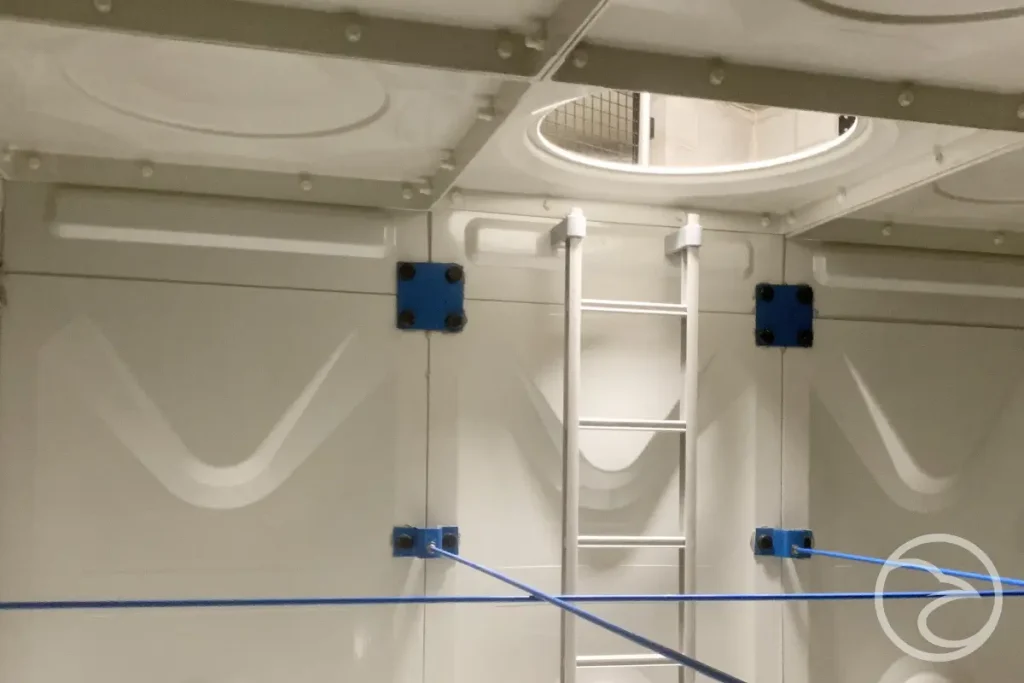
How are GRP Panel Tanks Used in Commercial Buildings?
Commercial buildings can require stored water for several purposes. Available tank space may also be restricted. GRP panel construction can help address these challenges.
Individual panels can be transported to the installation location before assembly. This can be useful in plant rooms and other restricted areas.
Commercial applications may include:
- Building water storage
- Emergency water supplies
- Fire protection systems
- Potable water storage
- Utility water systems
The exact tank configuration depends on building requirements. Available space, access, capacity, and water use all influence the final design.
How are GRP Panel Tanks Used for Fire Water Storage?
Fire protection systems can require a dedicated stored water supply. GRP panel tanks can be configured for some fire water storage applications. Their modular construction allows large capacities to be created from individual panels.
This can help where installation access is restricted. However, fire water storage systems must meet relevant project and regulatory requirements. Tank capacity is only one consideration.
Connections, access, structural design, and other system requirements also matter. The tank should therefore be specified for the intended fire protection application.
How Long do GRP Panel Tanks Last?
There is no single service life that applies to every GRP panel tank. Several factors influence long-term performance.
These include:
- Material quality
- Manufacturing quality
- Installation
- Tank design
- Water conditions
- Environmental exposure
- UV exposure
- Structural loading
- Maintenance
- Joint condition
- Seal condition
- Operating environment
Two similar tanks can therefore age differently. A tank in a protected internal environment faces different conditions from an exposed outdoor tank. Water characteristics can also influence internal conditions.
Maintenance practices matter throughout the tank’s operating life. Regular condition assessment can help identify deterioration as it develops.
Do GRP Panel Tanks Require Maintenance?
Yes. Corrosion resistance does not make a GRP tank maintenance-free. The tank is a complete system containing many components.
Panels are only one part of that system. Joints, seals, supports, connections, and access components also require consideration.
Maintenance can help identify:
- Joint deterioration
- Seal problems
- Leaks
- Panel damage
- Loose components
- Internal deposits
- External damage
- Connection problems
- Support issues
Maintenance requirements depend on the tank application and operating environment. A planned approach can help identify developing problems before they become more extensive.
What Problems can Develop in GRP Panel Tanks?
GRP offers several useful material properties. However, GRP tanks can still develop defects over time.
Joint Leakage
Panel tanks contain multiple joints. These areas rely on appropriate assembly and sealing. Deteriorated sealing materials can contribute to water leakage.
Movement or connection problems can also affect joint performance.
Seal Deterioration
Sealing materials can change as they age. Their condition can be influenced by water, temperature, movement, and environmental exposure.
Damaged seals may eventually affect water containment.
Panel Damage
GRP panels can experience physical damage. Possible causes include impacts, incorrect handling, excessive loading, or accidental contact.
The significance depends on the location and extent of damage.
Connection Problems
Pipe connections create interfaces between the tank and external systems. These areas can experience movement or mechanical stress.
Problems around fittings may also contribute to leakage.
Internal Deposits
Sediment and deposits can accumulate inside water storage tanks. The amount depends on water conditions and tank operation.
Deposits can affect tank hygiene and make some surfaces harder to assess.
Support Problems
Internal or external supports form part of many panel tank systems. Their condition contributes to overall structural performance.
Deteriorated or damaged supports may require further assessment.
Are GRP Panel Tanks Strong?
GRP combines relatively low weight with useful structural strength. However, tank strength depends on more than panel material. A complete tank must manage significant water pressure.
Pressure increases with water depth. The tank system therefore relies on its complete structural design.
Important elements can include:
- Panel strength
- Panel configuration
- Fasteners
- Internal supports
- External supports
- Base conditions
- Connection design
- Correct installation
A panel should not be considered independently from the complete system. The tank must be designed for its intended dimensions and operating conditions.
Are GRP Panel Tanks Weather Resistant?
GRP can perform well in many external environments. However, environmental conditions still matter.
Outdoor tanks can experience:
- Sunlight
- UV exposure
- Rain
- Temperature changes
- Wind
- Airborne contaminants
- Physical impacts
Long-term exposure can affect materials differently. The tank specification should therefore consider the installation environment. External components also need suitable material selection.
This includes fasteners, supports, fittings, and access equipment.
GRP Panel Tanks vs Steel Water Tanks
GRP and steel tanks can both provide effective water storage. However, the materials have different characteristics. GRP is a non-metallic composite. Steel is a metallic material.
This creates several practical differences.
| GRP Panel Tanks | Steel Water Tanks |
|---|---|
| Non-metallic panel material | Metallic construction |
| Does not rust like carbon steel | Can require corrosion protection |
| Relatively lightweight panels | Generally heavier components |
| Modular configurations available | Modular configurations also available |
| Different surface maintenance needs | Protective surfaces may require maintenance |
| Composite material | Metal material |
Neither material is automatically suitable for every application. Tank selection depends on project requirements.
For a detailed material comparison, see HDG vs GRP tanks to explore their differences, benefits, and suitable water storage applications.
Why is Installation Quality Important?
A good tank material cannot compensate for every installation problem. Panel alignment and connection quality affect the complete structure. Seals also need correct positioning.
Supporting structures must provide suitable conditions for the tank.
Poor installation can contribute to:
- Joint problems
- Leakage
- Uneven loading
- Seal damage
- Panel stress
- Connection problems
The complete tank should therefore be assembled according to its design requirements. Installation quality can influence both immediate performance and long-term condition.
Why are Joints Important in GRP Panel Tanks?
Joints are a defining feature of sectional tanks. Every connected panel creates an interface within the tank system. These interfaces must maintain structural connection and water containment.
Sealing materials are therefore important. Fasteners also help maintain the required connection between panels. Joint condition can change over time.
Movement, ageing seals, or damaged components may affect performance. For this reason, joints are important areas during ongoing tank maintenance.
Why are GRP Panel Tanks Useful for Restricted Sites?
Restricted access can make water tank installation difficult. A large one-piece tank may not fit through available access routes. GRP panels can be transported separately.
They can then be assembled at the installation location.
This can provide an advantage for:
- Existing buildings
- Plant rooms
- Basements
- Rooftop installations
- Restricted service areas
- Sites with narrow access routes
The modular approach does not remove all installation challenges. The site still requires suitable access for workers, equipment, and tank components.
Can GRP Panel Tanks be Customised?
Modular construction provides flexibility in tank configuration. Different combinations of panels can create different tank dimensions. This can help match available space with required storage capacity.
Customisation may involve:
- Tank length
- Tank width
- Tank height
- Connection positions
- Access locations
- Storage capacity
- Internal arrangements
Available options depend on the specific tank system. Structural requirements can also limit some configurations. Tank design should therefore consider both storage needs and site conditions.
When are GRP Panel Tanks a Suitable Choice?
GRP panel tanks can be suitable when a project requires flexible water storage. They are particularly useful where modular construction provides practical advantages.
A GRP tank may be considered when a project requires:
- Flexible tank dimensions
- Modular construction
- Corrosion-resistant panel material
- Restricted site access
- On-site assembly
- Commercial water storage
- Industrial water storage
- Large storage capacities
- Different configuration options
However, material selection should consider the complete project. Water type, environment, capacity, access, and applicable requirements all matter.
The best tank solution depends on the specific application. Our GRP panel tanks provide flexible water storage solutions for commercial and industrial applications with different capacity and configuration requirements.
Understanding GRP Panel Water Tanks
GRP panel tanks combine composite materials with modular construction. Individual GRP panels form the walls, floor, and roof of the complete storage system. This construction provides flexibility in tank size and configuration.
It can also simplify transport to locations with restricted access. GRP offers useful corrosion resistance because it does not rust like carbon steel. However, a GRP tank is not maintenance-free.
Joints, seals, supports, connections, and panels can still experience deterioration. The complete tank should therefore be considered throughout its operating life.
For suitable applications, GRP panel water tanks provide a flexible approach to commercial and industrial water storage.